The majority of people believe that the most significant conflicts we have are those that arise in the real world between us and our circumstances, our obligations, or the demands made of us. However,the mind and the reality is both much simpler and much more complicated: the greatest conflict you will ever encounter takes place inside your own head. It is unseen, silent, and unchanging. And even when we truly want to change, the majority of us spend our entire lives not knowing why we act contrary to our decisions.
This is not a sign of weakness, laziness, or a lack of self-control; rather, it is a psychological conflict where your intentions pull in one direction and your actions pull in another. It is a more profound internal mechanism that functions beneath conscious awareness. And realizing it can fundamentally alter how you see your own identity as well as your habits, mistakes, and choices.
Let’s start with a story to help clarify this.
The Story of Aanya: The Girl Who Wanted to Change
Aanya was the type of girl who was constantly organizing things. She kept journals with lists, schedules, routines, and ideas. Every Sunday night, she would make a commitment to transform her life starting on Monday: get up early, exercise, cut back on screen time, study regularly, and take better care of herself.
On Monday, however, things unfolded as they always did. She told herself she needed “five more minutes” after turning off her alarm when she woke up. Those five minutes turned into forty. She put off her workout. Her plans fell apart. She would make even more ambitious plans for the following day because by the evening she would feel guilty, nervous, and disappointed.
Nevertheless, the following day went exactly as planned.
Aanya often wondered, “Why can’t I do what I say I’ll do? Why am I not able to control my own behaviour?”
She wasn’t unmotivated. She wasn’t uninterested. She wasn’t incapable.
She was simply stuck in the same silent battle that millions of people experience every single day.
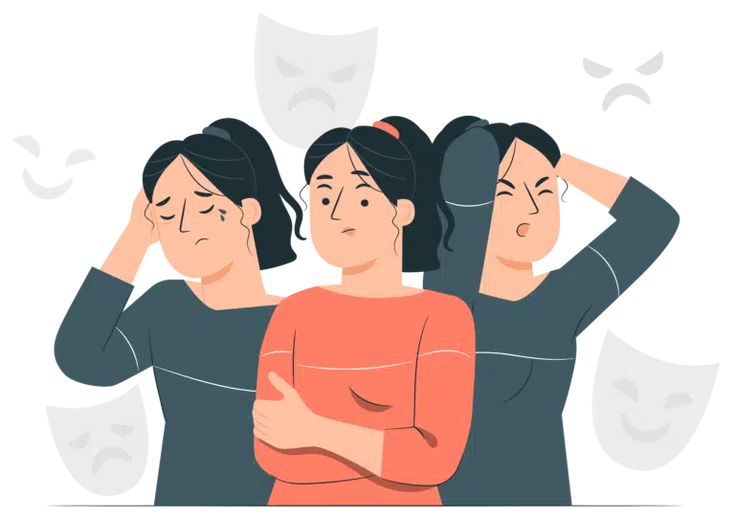
The Real Reason We Do the Opposite of What We Decide
Psychology explains this phenomenon through several interconnected concepts cognitive dissonance, habit loops, emotional decision-making, reward pathways, and behaviour conditioning. When these systems conflict with each other, your actions stop aligning with your intentions.
Let’s break this down.
1. Cognitive Dissonance: The Inner Tug-of-War
When your mind simultaneously holds two opposing beliefs, it is known as cognitive dissonance:
“I’d like to get up early.”
“I want to relax and be comfortable.”
Both are accurate.
However, only one prevails.
Aanya felt empowered and optimistic when she considered getting up early the previous evening. However, the need for comfort was more intense in the morning. Her brain automatically chose the simpler option to ease the mental strain caused by the conflict.
This is a mental shortcut the human brain takes to ease discomfort, not a sign of personal failure.
Your mind selects the route that uses the least amount of energy when it detects friction. This is why people procrastinate even when they want to be productive. This is why people stay in unhealthy cycles even when they want to break free.
Know more about this – HERE
2.The Habit Loop: Your Brain Works on Autopilot
Much of your behaviour is not driven by intention it’s driven by habit loops that your brain has repeated for months or years.
Every habit loop has three stages:
Cue → Routine → Reward
For Aanya:
- Cue: Alarm rings
- Routine: Snoozing
- Reward: Comfort + relief
Your brain learns to crave the reward, not the behaviour.
This is why even when you genuinely want to wake up early, your brain still chooses comfort. The habit loop has been repeated so many times that it overrides logical thinking.
Habits are not broken with motivation.
They are broken by restructuring the cue, routine, and reward.
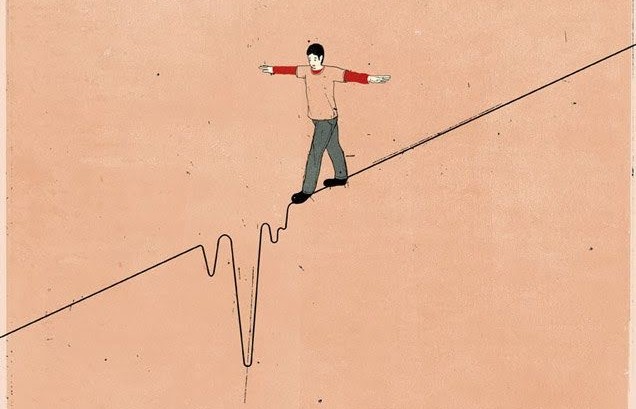
3. The Emotional Mind Is Stronger Than the Logical Mind
One of the most important insights in behavioural psychology is this:
We do not act based on what makes sense.
We act based on what feels safe.
The emotional mind:
- reacts instantly
- seeks comfort
- avoids effort
- fears discomfort
- prefers familiarity
The logical mind:
- plans
- makes lists
- analyzes
- sets goals
- thinks long-term
These two minds are always interacting, but they are not equally powerful.
The emotional mind acts faster.
The logical mind acts later.
So even if your rational brain says, “We need to make a change,” your emotional brain says, “Not right now,” and wins.
This is why Aanya’s actions never matched her intentions.
4. Self-Sabotage: Protecting Yourself From Discomfort, Not Danger
Self-sabotage does not indicate a desire for failure.
It indicates that your brain is attempting to defend you.
Even if a new habit is beneficial to you, your mind perceives it as a threat when it feels overwhelming, frightening, or uncomfortable.
Therefore, your brain selects the safer course of action, even if it takes you away from your objectives.
For instance: Putting off chores to prevent feeling overburdened, Thinking too much to act,Going back to old habits because they are comfortable,Steer clear of challenging conversations to prevent emotional distress.
Because she didn’t care, Aanya wasn’t picking Netflix over productivity.
Emotional comfort was more important to her than emotional discomfort.
This is extremely misinterpreted and constitutes self-sabotage.
5.Behaviour Patterns Are Built From Repetition, Not Intention
You don’t act based on what you want.
You act based on what you’re used to.
If you’ve been procrastinating for years, your brain is naturally wired for delay.
If you’ve been living in survival mode, your brain is wired for fear-based decisions.
If you’ve been avoiding discomfort, your brain is wired to escape anything challenging.
Aanya’s struggle was not lack of motivation it was years of reinforced behaviour.
Breaking the Pattern: How Aanya Slowly Changed Her Mind
Let’s continue her story.
One day, Aanya realized she needed to stop making perfect plans and start making practical changes. She began by restructuring her relationship with self-discipline.
Here’s how she broke the cycle.
1. She Reduced the Size of Her Goals
Instead of forcing herself to wake up two hours earlier, she set her goal to just ten minutes. Because her brain didn’t see this as a threat, she didn’t resist it. Small goals feel safe. Safe goals don’t cause emotional discomfort. That’s why small changes are more effective than big transformations.
2.She Identified Her Emotional Triggers
She noticed that she avoided tasks not because they were difficult, but because they felt emotionally heavy.
For example:
- She avoided studying because it made her feel insecure about her abilities.
- She avoided waking up early because she associated mornings with pressure.
- She avoided working out because she feared she wouldn’t be consistent.
Once she understood the emotion behind the behaviour, change became easier.
3.She Replaced the Reward, Not the Habit
Aanya learned that her brain wanted a reward, not the snooze button.
So she created new rewards:
- Soft music after waking up
- A warm shower
- Five minutes of sunlight
- A favourite breakfast item
These small rewards made the new routine feel rewarding, not punishing.
4.She Spoke to Her Emotional Mind
Instead of fighting her urges, she negotiated with them:
- “Let’s just start for 5 minutes.”
- “We will rest after this.”
- “This isn’t as scary as it feels.”
This self-talk slowly rewired her reactions.
The Final Insight: Your Mind Isn’t Your Enemy
Through her journey, Aanya realized something powerful:
Your mind isn’t working against you.
It’s protecting you the only way it knows how.
When you understand why your behaviour contradicts your intentions, you stop judging yourself. You stop feeling guilty. And you start working with your mind instead of against it.
Aanya didn’t become a new person overnight.
But slowly, her actions began aligning with her intentions.
Not because her life changed
but because she finally understood how her mind worked.
Final Takeaway
If your mind says one thing but you do another, understand this:
- You’re not lazy.
- You’re not broken.
- You’re not undisciplined.
- You’re not failing.
You are simply human—operating under patterns that were formed long before you decided to change.
Once you understand your psychology, you can rewrite your behaviour.
The silent battle doesn’t disappear.
But you finally learn how to win it.
Know more about us here- ABOUT US
Leave a Reply